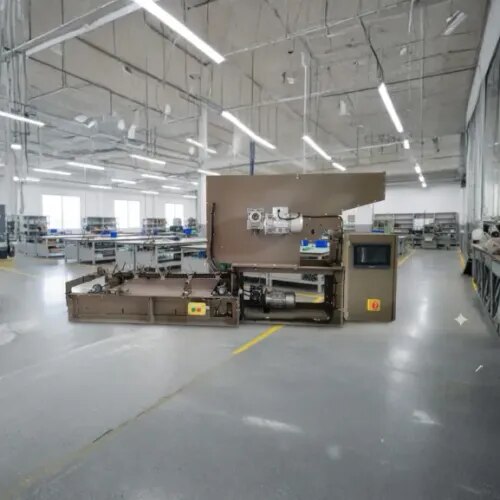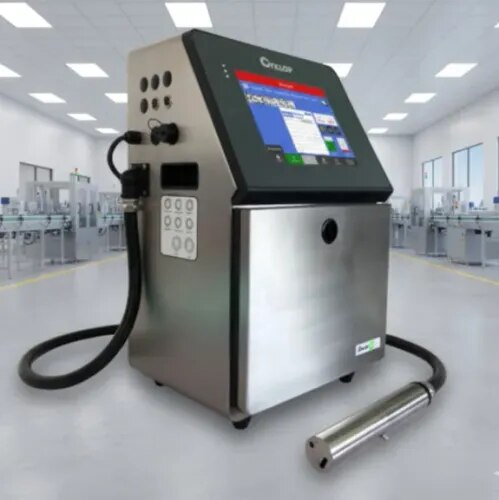

AUTOMATION SOLUTIONS
Description
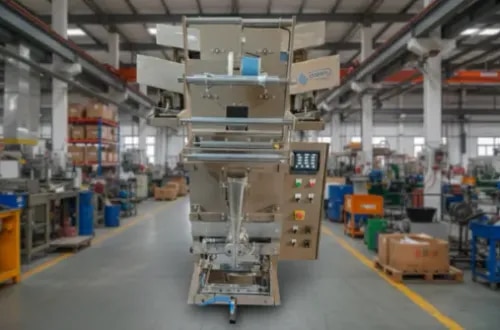
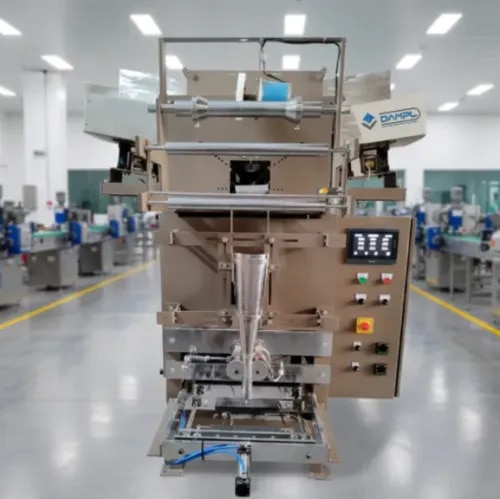
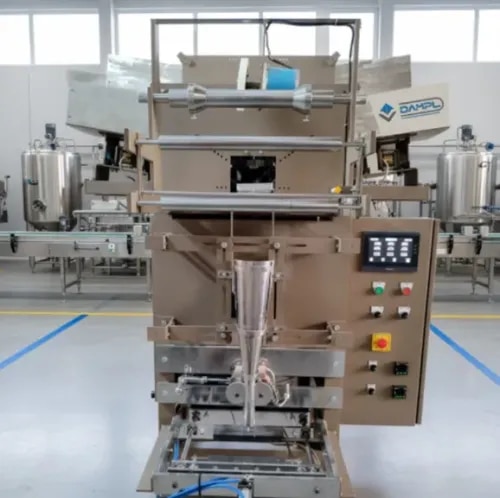
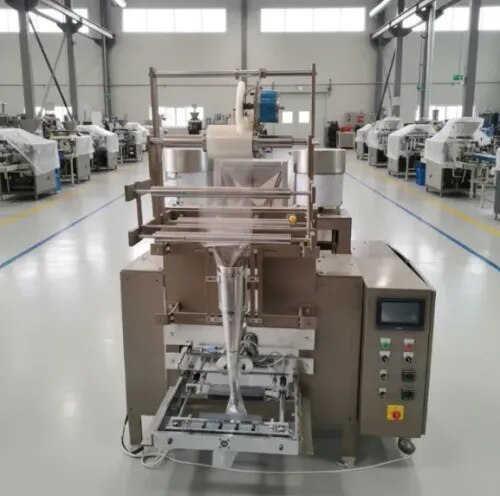
AUTOMATION SOLUTIONS PACKING MACHINERY
Industrial Automation Solutions
Dhyan Automation Machinery Pvt. Ltd. provides industrial automation solutions designed to improve production efficiency, packaging accuracy, process consistency, and operational productivity. These solutions help businesses streamline repetitive tasks, integrate industrial equipment, and optimize manufacturing and packaging workflows.
Industrial automation combines machinery, control systems, sensors, conveyors, and programmable logic controllers (PLCs) to coordinate operations with reduced manual intervention. Depending on the application, automation solutions can support product handling, packaging, strapping, stretch wrapping, material transfer, and end-of-line packaging processes.
Dhyan Automation Machinery Pvt. Ltd. offers automation solutions for businesses seeking to modernize their industrial operations and improve packaging-line performance. Systems can be evaluated and configured according to production requirements, product dimensions, operating speed, available floor space, and integration needs.
From individual automated machines to coordinated packaging systems, the right automation setup can help businesses achieve more consistent results, improve workflow organization, and reduce unnecessary material handling.
## Key Features of Industrial Automation Solutions
- Automated handling of repetitive production and packaging tasks
- Integration of industrial machines and packaging equipment
- PLC-based machine control, depending on the system
- Improved process consistency and operational repeatability
- Reduced dependence on manual handling
- Integration with suitable conveyors and material-handling systems
- Configurable solutions for different industrial applications
- Support for packaging and end-of-line automation
- Improved coordination between production and packaging stages
- Potential for monitoring operating parameters through suitable control systems
- Designed around individual production requirements
- Expandable system architecture where supported by the selected equipment
## Types of Automation Solutions
### 1. Packaging Automation
Packaging automation helps streamline repetitive packaging operations, including product positioning, strapping, wrapping, and package preparation.
Suitable applications may include manufacturing facilities, distribution centres, and industrial packaging departments.
### 2. Conveyor and Material-Handling Automation
Conveyor-based systems help transfer products between production, inspection, packaging, and dispatch stations. Appropriate automation can reduce unnecessary manual movement and improve material flow.
### 3. Strapping Automation
Automatic strapping systems apply straps around compatible packages or pallet loads to help secure products for storage and transportation.
The configuration depends on package dimensions, strap material, required tension, and production output.
### 4. Stretch-Wrapping Automation
Automatic stretch wrappers apply stretch film around palletized loads to help contain products and improve load stability during handling and transportation.
### 5. Integrated Packaging Lines
Integrated packaging lines coordinate multiple machines and material-handling systems to create a more continuous workflow. Depending on requirements, these systems may combine strapping, wrapping, conveying, and other packaging processes.
### 6. Customized Industrial Automation
Customized automation solutions can be developed around a business's process requirements, production layout, product characteristics, and desired level of automation, subject to engineering feasibility.
## Technical Specifications
Automation systems are application-specific. The following parameters should be finalized during system selection and engineering.
| Parameter | Specification |
|---|---|
| Solution Type | Industrial Automation Solutions |
| Application | Manufacturing, packaging, and material handling |
| Automation Level | Semi-automatic or fully automatic, depending on system |
| Control System | PLC, HMI, or other suitable controls, depending on configuration |
| Machine Integration | Based on equipment compatibility |
| Material Handling | Conveyor or other suitable transfer system, where required |
| Production Capacity | Defined according to application requirements |
| Product Dimensions | Based on the products being handled |
| Sensors and Safety Devices | Selected according to system design |
| Electrical Requirements | Based on the selected equipment |
| Communication Interfaces | Subject to controller and equipment compatibility |
| Installation Layout | Customized to the production environment |
| Maintenance Requirements | Based on the installed components and operating conditions |
Note: These are general engineering parameters, not verified specifications for a particular automation system. Final equipment selection, capacity, controls, and technical requirements should be confirmed with Dhyan Automation Machinery Pvt. Ltd.
## Applications of Industrial Automation
Industrial automation solutions can support a wide range of manufacturing and packaging operations, including:
- Industrial manufacturing facilities
- Packaging and dispatch departments
- Warehousing and distribution centres
- Corrugated box and carton packaging
- Paper and printing industries
- Consumer goods manufacturing
- Pharmaceutical packaging operations, subject to applicable requirements
- Industrial product handling
- Pallet strapping and stretch wrapping
- Production-line material transfer
- End-of-line packaging systems
- Automated logistics workflows
The appropriate solution depends on the production process, product characteristics, operating environment, and required output.
## Benefits of Industrial Automation Solutions
### 1. Improved Productivity
Automation can reduce repetitive manual tasks and support a more continuous production or packaging workflow.
### 2. Consistent Process Quality
Programmed operating sequences and suitable control systems help maintain repeatable process parameters and reduce variations caused by manual operation.
### 3. Reduced Manual Handling
Automated material transfer and machine operation can reduce unnecessary handling and repetitive physical work.
### 4. Better Workflow Coordination
Connecting compatible machines and conveyors helps coordinate product movement between process stages.
### 5. Improved Operational Visibility
Suitable sensors, operator panels, and control systems can provide information about machine status, alarms, and operating parameters.
### 6. Efficient Use of Resources
A properly designed automation system can help reduce avoidable process delays, material movement, and packaging inconsistencies.
### 7. Scalable Operations
Where equipment and control architecture support expansion, automation can be extended to additional process stages as production requirements evolve.
## How Does an Industrial Automation System Work?
The operating sequence depends on the application. A typical industrial automation workflow includes:
1. Requirement analysis: The product, process, production target, and operating environment are assessed.
2. System design: Suitable machines, controls, sensors, and material-handling equipment are selected.
3. Product detection: Sensors or operator inputs identify the product or initiate the process.
4. Automated operation: The controller coordinates the relevant machine functions and operating sequence.
5. Process monitoring: The system monitors configured parameters and identifies operating faults where supported.
6. Product transfer: The product moves to the next station through a conveyor or suitable handling method.
7. Output verification: The completed process is checked according to the application's quality and safety requirements.
The exact workflow, control logic, and inspection functions depend on the final system design.
## Factors to Consider Before Selecting an Automation Solution
Before implementing an industrial automation system, evaluate the following:
- Existing production or packaging process
- Product dimensions, weight, and material
- Required production output
- Desired level of automation
- Existing machinery and control systems
- Conveyor and material-handling requirements
- Available installation space
- Electrical and utility requirements
- Workplace safety requirements
- Quality-control and inspection needs
- Communication between machines
- Maintenance and operator training requirements
- Scope for future expansion
A detailed assessment helps identify the most suitable automation approach for the business.
## Why Choose Dhyan Automation Machinery Pvt. Ltd.?
Dhyan Automation Machinery Pvt. Ltd. provides industrial packaging and automation machinery solutions for businesses looking to improve operational efficiency and streamline packaging processes.
Choosing an automation solution requires an understanding of the existing workflow, production objectives, equipment compatibility, and long-term operating requirements. A properly planned system can help coordinate machine operations, reduce unnecessary manual handling, and improve process consistency.
Businesses should discuss their application requirements with the supplier to identify suitable equipment, integration possibilities, installation needs, and expected operating capacity.
## Frequently Asked Questions
1. What are industrial automation solutions?
Industrial automation solutions use machinery, control systems, sensors, and related equipment to perform or coordinate industrial processes with reduced manual intervention.
2. What are the main benefits of industrial automation?
Key benefits can include improved productivity, repeatable process quality, reduced manual handling, better workflow coordination, and improved visibility into machine operations.
3. Can automation solutions be customized?
Automation systems can often be configured around product dimensions, production targets, existing equipment, and available installation space, subject to engineering feasibility.
4. Which industries can use industrial automation?
Manufacturing, packaging, warehousing, logistics, paper processing, consumer goods, and other industries may benefit from suitable automation systems.
5. Can automation systems integrate with existing machinery?
Integration may be possible if the machines, control systems, communication interfaces, and safety arrangements are compatible.
6. What is a PLC in industrial automation?
A programmable logic controller (PLC) is an industrial controller used to execute programmed instructions and coordinate machine functions based on inputs and operating conditions.
7. How do I select the right automation system?
Consider your current process, product specifications, required production output, desired automation level, machine compatibility, available space, and safety requirements.
8. What information is needed for an automation quotation?
Provide details about the application, product dimensions, production target, current machinery, workflow, available floor space, and desired automation functions.
Dhyan Automation Machinery Pvt. Ltd. offers industrial automation solutions designed to improve manufacturing, material handling, and packaging workflows. Depending on the application, systems can integrate automated machinery, PLC controls, conveyors, strapping equipment, and stretch wrapping solutions to improve process consistency and operational efficiency.
Industrial Automation Solutions | Dhyan Automation Machinery Pvt. Ltd.
Explore industrial automation solutions from Dhyan Automation Machinery Pvt. Ltd. for packaging, material handling, machine integration, and improved production efficiency.
- Industrial Automation Solutions
- Industrial Automation Systems
- Packaging Automation Solutions
- Industrial Packaging Automation
- Automated Material Handling Systems
- Manufacturing Automation Solutions
- PLC-Based Automation Systems
- Industrial Machine Integration
- End-of-Line Packaging Automation
- Automatic Packaging Systems
- Industrial Automation Machinery Supplier in India
- Dhyan Automation Machinery Pvt. Ltd.
## Product USP
Application-oriented industrial automation solutions designed to coordinate machinery, improve packaging and material-handling workflows, reduce repetitive manual tasks, and support consistent industrial operations.